Movement Puzzles first started as a training tool to help sport and working dogs move with control and precision in challenging situations. So that they could stay safe and fully focus on the work at hand without worrying about the environment or how to move in new situations.
However, when I started teaching the first Movement Puzzles classes in 2020, my students quickly started reporting back on other changes and benefits they were noticing in their dogs as a result of doing these fun pattern movement exercises.
Here are 7 powerful benefits that Movement Puzzles offer, proven by more than 2000 students since 2020.
1. Confidence 🏆
By learning how to move and use their body in new and tricky situations, you’ll soon notice your dog also becoming more confident! They get a feeling of “I can totally do this! I know I’ll stay safe and it’s all good!” because they’ve practiced these skills during Movement Puzzles!
Cautious dogs will start exploring more. Dogs who have been scared for a long time start to try new things. Sport dogs move with ease in new situations, not letting weird places distract them from work.
This becomes possible thanks to HOW we teach Movement Puzzles. When Movement Puzzles are done correctly, dogs will get a reward even when they choose not to do the exercise. But because all the exercises have been first trained separately, respecting the dog’s comfort level and making sure the exercises are ACTUALLY FUN for the dog… they TRULY CHOOSE doing the exercises.
Which means they will also be choosing similar looking challenges for themselves in real life! And that’s why we see dog’s confidence skyrocketing 🚀 with Movement Puzzles!
2. Impulse control 🏆
This first came as a surprise to me… But now it makes complete sense. Movement Puzzles help dogs control impulsive behaviors better! And the best part is – control impulsive behaviors while actually in motion!
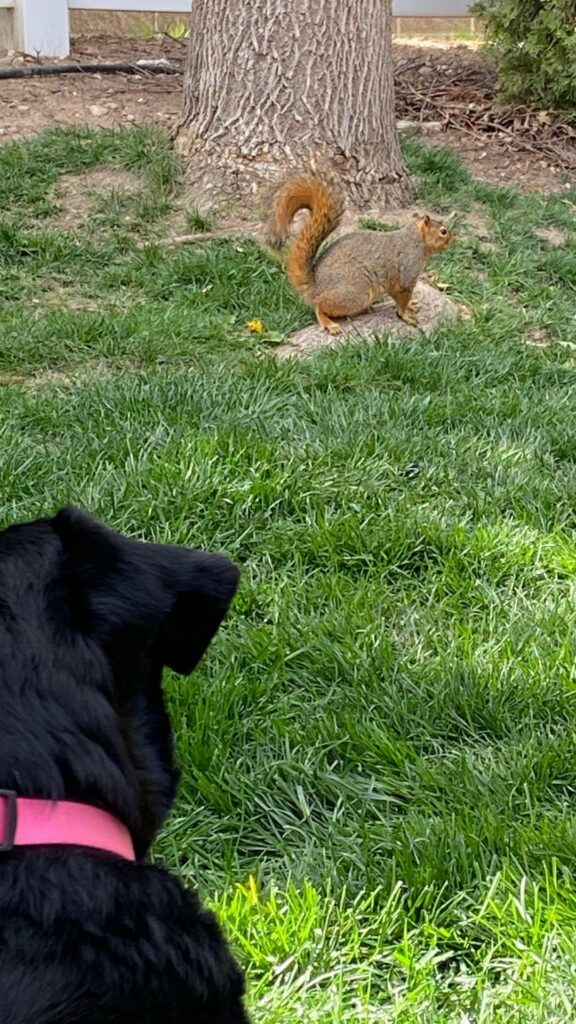
It’s a lot easier to teach a dog to sit and ignore food being dropped on the ground… But as soon as your dog is moving, it becomes a lot more difficult for them to resist a temptation like going after that squirrel they just saw crossing the street! Ever noticed how much easier it is for dogs to sit and let people pass on the street vs walk next to you and remain calm when passing people? That’s exactly what I’m talking about here.
Thanks to the “speed limit” designed into Movement Puzzles, dogs become a lot better at controlling their choices while running! It is known from the human world that doing motor control exercises reduces impulsive decisions.
Movement Puzzles are always done in trot or slower. So impulsive, rushing loving dogs will start controlling themselves better to meet that speed criteria. Plus, many Puzzle exercises actually require the dog to slow down and think while running!
3. Feeling calmer in previously scary situations. 🏆
In the dog training world it often feels like behavioral work and fitness work are seen as two completely separate things. One of my big goals is to change that and reduce the gap that seems to exist between training programs focusing on behavior challenges… and training programs focused on body awareness, balance and coordination.
When you do body awareness, coordination and balance exercises, you are actually working on the exact same nervous system that is also responsible for your dog’s behavior (and behavior challenges)!
In humans, it is already recognized that doing this type of fitness or proprioceptive exercises is a very powerful tool in therapy. In fact, proprioception – understanding where one’s different body parts are and how they move with respect to each other and the environment – is sometimes even called A NEED! And this need not being met can quickly result in behaviors that can be seen as challenging or problematic in daily life.
Body awareness, balance, coordination and other fitness exercises help the body to deal better with stressful situations. They improve memory, attention span and learning speed.
They also help to balance dopamine, serotonin and norepinephrine levels, which is most likely why our students have noticed their dogs becoming less sensitive to loud noises or previously scary situations like planes flying over their home.
4. Emotional regulation. 🏆
This benefit is actually linked to the third point just above. From human children we know that good proprioception is extremely important for developing good emotional self regulation, also for reducing frustration and anxiety.
We NEED proprioceptive input and exercises for emotional self regulation! And I can’t see why it wouldn’t be the same for our dogs. Our nervous systems aren’t that different!
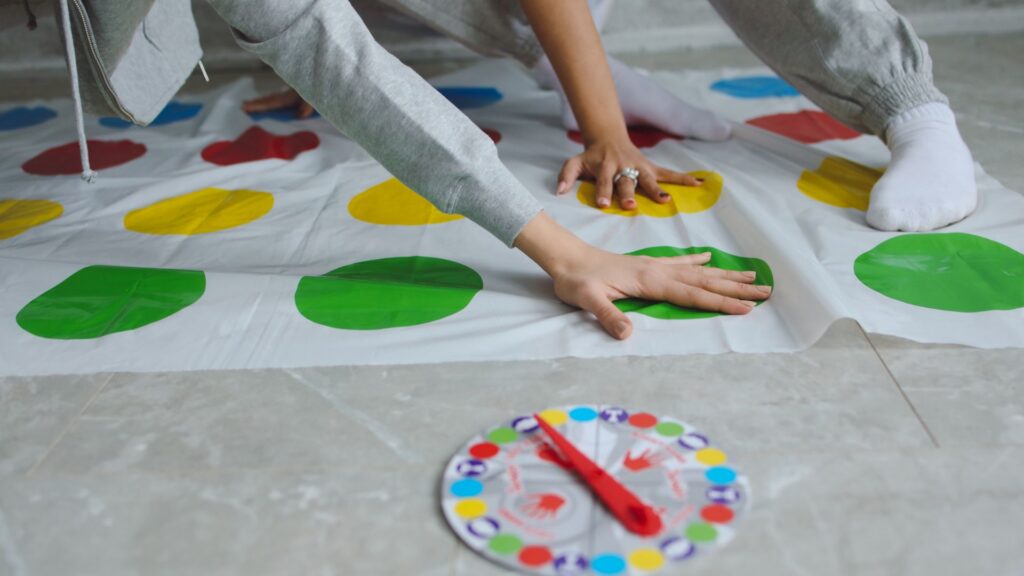
Yet, we have loads of games for developing this in our children – even just “put your finger to your nose” or playing Twister… But we have very few activities or recognition of this need in our dogs. While it could be the key link for better self regulation, lower frustration and anxiety in our canine companions!
In fact, Movement Puzzles are proving to be invaluable for this exact purpose! In 2025 we started testing using Movement Puzzles to help reactive dogs feel more at ease and start making better decisions near other dogs… and the results are astonishing! If reducing reactivity is in your agenda, then check out our Reactivity Special course.
5. Distance skills. 🏆
Thanks to Movement Puzzles being based on the dog’s independent choice and engagement with the setup (and the shape that increases distance with experience), your dog will become a lot more confident working on their own and further away from you!
The benefit of this is more obvious in nosework or search and rescue training where the dog is supposed to focus on the work without too much handler guidance. But it’s also important in sports like agility, where you may want your dog to commit to doing the obstacle further away from you after you’ve cued it!
6. Learning new skills faster 🏆
It’s becoming more and more common knowledge that in order to perform at their best in any sport or activity, dogs need fitness training. In fact, I’d argue that every single thing we expect from our dogs, requires body awareness and coordination from them.
Want your dog not run into your legs when coming to greet you at the door? That requires motor control from the dog to actually stop before they get to your legs. Right now I have a 1 yo very enthusiastic youngster living with me who constantly runs into my legs. I can tell that he’d like to stop before hitting me – I can see him mentally hitting the brakes, but he doesn’t have the physical control yet to actually stop before he hits me. The prerequisite for him learning to stop further away from me? Him developing body control (that includes muscle strength) to stop faster.
Trying to get your dog on the scale in the corner of the vet clinic reception? Chances are that your dog would need to know the size of their own body and where their paws are in order to happily get on the scale. Depending on the positioning of the scale, they may also need to know their own size and how to comfortably navigate tight spaces!
The better your dog knows where different body parts are, how to move and control them and also how to quickly process the information, the faster your dog can learn whatever you are trying to teach them! Because they can focus on figuring out the exercise criteria, instead of trying to multitask and trying to figure out how to use their bodies at the same time.
7. Understanding your dog better & improved relationship. 🏆
A big part of doing Movement Puzzles is actually processing your dog’s response to the setup you’ve prepared… and learning from your dog!
In exercises like Movement Puzzles, where your dog gets a reward for every repetition, even when they didn’t do the exercise as you intended, you have to become very good at observing your dog’s choices and understanding them. Without developing this skill, you’ll end up with your dog offering random behaviors or always taking a shortcut and avoiding the setup.
The whole idea of rewarding every rep and helping the dog actually choose doing the exercise for themselves, relies on the fact that you notice them, how they choose to do the exercise and adjust it so that they’d actually want to choose doing it the way you imagined!
So, instead of waiting for your dog to figure it out through tens of failed repetitions, you observe your dog, analyze why they did the exercise the way they did. And then adjust the setup.
As a result, you’ll start learning from your dog, know exactly what is easy and what is difficult for them. And this will carry over to all your other training sessions as well! So you can plan your sessions better, understand how to change exercises when your dog is struggling. And your dog will know they can trust you and are more willing to try new things, because they know they are “heard”!
Wow! No wonder Movement Puzzles are popular! Which is your favorite benefit from this list? Leave me a comment, I look forward to hearing from you!
Happy training!
Mari Valgma, the creator of Movement Puzzles™
Thank you for this. It has made me think more about my training with Sam.
My pleasure! Glad you enjoyed this post 🙂
Learning new things faster. Body control!!
Yay! That’s definitely an awesome benefit 🙂
Learning how to organize and recognize what my dog felt were uncomfortable components when arranging narrow spaces to improve body awareness